Canada's 50% Counter-Tariffs Hit U.S. Dairy and Steel: What the Retaliation Costs Your Supply Chain
The former central banker known for calming markets is now weaponizing trade policy. Mark Carney, less than a year into his term as Prime Minister, has imposed 50% counter-tariffs on U.S. dairy and steel imports effective this month, pairing the measure with a multi-billion dollar support package for Canadian firms caught in the fallout. The move answers the Trump administration's own 50% levy on Canadian exports announced in August 2026, turning what was already a tense USMCA relationship into open economic retaliation.
Why these sectors were chosen
The dairy surcharge is as much about ideology as economics. Canada's supply management system, government-controlled production quotas and import barriers that keep domestic prices stable, has been a flashpoint in every trade negotiation since the original NAFTA talks in the 1990s. By targeting U.S. dairy specifically, Carney is defending a policy structure American trade officials have tried to dismantle for decades. The steel tariff follows a different logic. It hits producers concentrated in swing states, a deliberate attempt to generate political pressure on the White House from factory towns whose votes matter in the next election cycle.
This isn't the first round. In 2018, U.S. Section 232 tariffs on Canadian steel and aluminum triggered C$15.6 billion in Canadian counter-measures. Steel shipments to the U.S. dropped by nearly 40% during that period, according to Business Data Lab analysis. The 2026 version is larger in scope and arrives at a worse moment. The USMCA's mandatory joint review date, July 1, 2026, just passed, and instead of extending the agreement, the parties are now exchanging tariff threats that cast doubt on whether the deal survives its next scheduled assessment in 2027.
What breaks in the supply chain
Canadian manufacturers who rely on specialized U.S. steel inputs face an immediate cost problem. A 50% tariff on imported coil or billet doesn't just raise the invoice price. It forces procurement teams to find alternative suppliers in Europe or among CPTPP partners, often with longer lead times and transportation costs that weren't in the original budget. Automotive assembly plants in Ontario that source components from Michigan now have to recalculate the landed cost of every cross-border part. Construction projects that locked in U.S. steel contracts months ago are repricing or delaying.
The business relief programs announced alongside the tariffs are meant to cushion this. Details remain sparse, but early government estimates suggest a package in the low billions distributed through Global Affairs Canada and provincial agencies. The question is whether subsidies can replace lost access. A 50% tariff doesn't just make American steel expensive. It often makes it uncompetitive even after domestic producers raise their own prices to just below the tariff-inflated import level. Canadian steel mills gain pricing power, but buyers lose the ability to source the exact grade they need when they need it.
The inflationary squeeze
The Bank of Canada, which Carney led from 2008 to 2013, is now monitoring the price pressure these tariffs create. Importing goods at 50% above prior cost pushes the Consumer Price Index higher unless demand collapses or domestic production absorbs the difference. For industries where U.S. inputs have no perfect Canadian substitute, the tariff acts as a tax on production that eventually reaches the consumer. That conflicts directly with the Bank's mandate to keep inflation near 2%.
Carney's shift from globalist central banker to protectionist prime minister is the deeper story. The man who spent a career arguing for open capital flows and rules-based trade is now matching Trump measure for measure, a forced political pivot that tests whether "symmetrical reciprocity" can pressure Washington or simply locks both economies into a retaliatory spiral. If the U.S. answers with tariffs on Canadian energy exports, the cost will escalate beyond steel and dairy into the sectors that actually fund the federal budget. The counter-tariff strategy assumes the other side blinks first. The 2018 episode suggests neither will.
CSIS - the parties are now exchanging tariff threats that cast doubt on whether the deal survives its next scheduled assessment - 2025-08-20. https://www.csis.org/analysis/usmca-review-2026


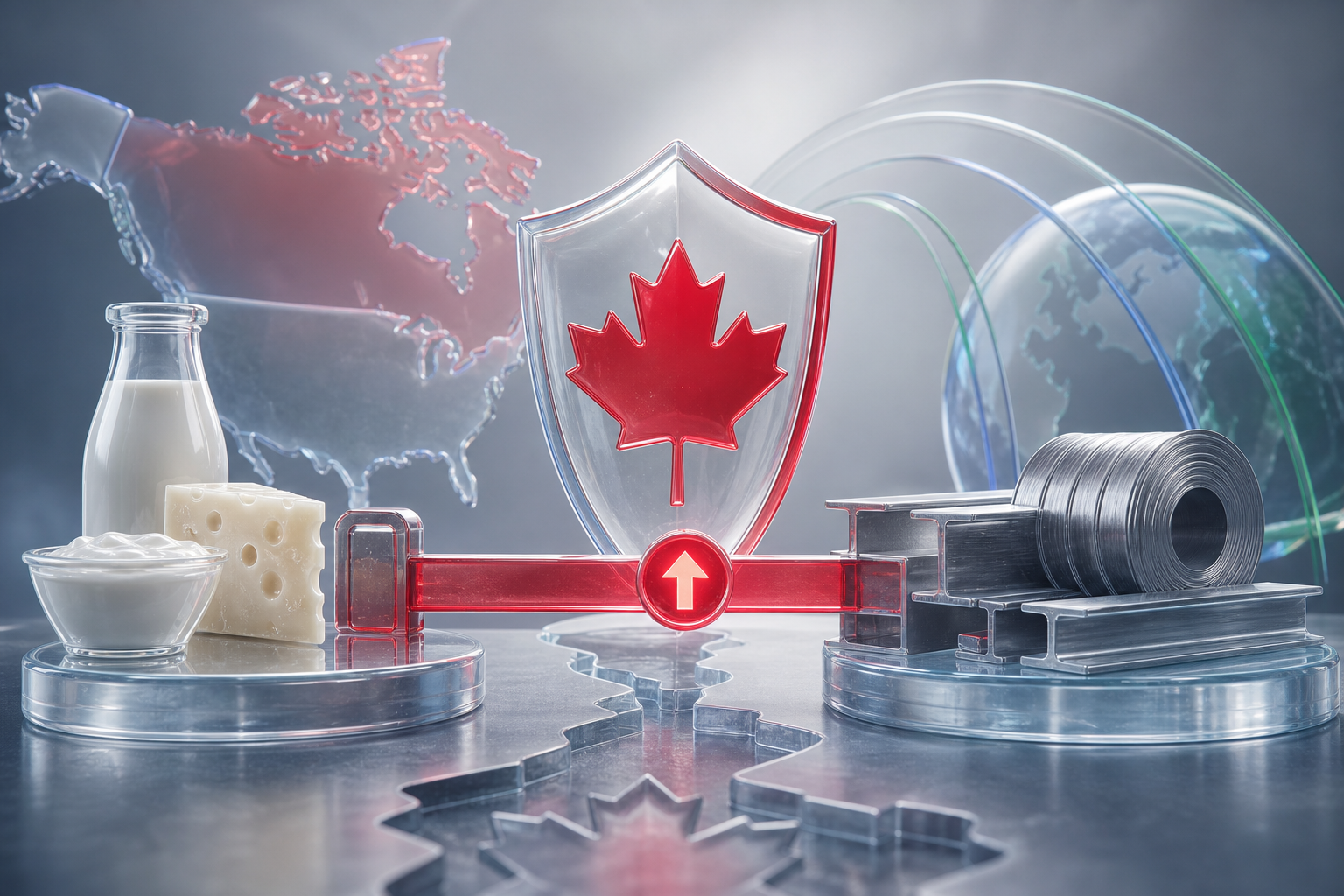

The former central banker known for calming markets is now weaponizing trade policy. Mark Carney, less than a year into his term as Prime Minister, has imposed 50% counter-tariffs on U.S. dairy and steel imports effective this month, pairing the measure with a multi-billion dollar support package for Canadian firms caught in the fallout. The move answers the Trump administration's own 50% levy on Canadian exports announced in August 2026, turning what was already a tense USMCA relationship into open economic retaliation.
Why these sectors were chosen
The dairy surcharge is as much about ideology as economics. Canada's supply management system, government-controlled production quotas and import barriers that keep domestic prices stable, has been a flashpoint in every trade negotiation since the original NAFTA talks in the 1990s. By targeting U.S. dairy specifically, Carney is defending a policy structure American trade officials have tried to dismantle for decades. The steel tariff follows a different logic. It hits producers concentrated in swing states, a deliberate attempt to generate political pressure on the White House from factory towns whose votes matter in the next election cycle.
This isn't the first round. In 2018, U.S. Section 232 tariffs on Canadian steel and aluminum triggered C$15.6 billion in Canadian counter-measures. Steel shipments to the U.S. dropped by nearly 40% during that period, according to Business Data Lab analysis. The 2026 version is larger in scope and arrives at a worse moment. The USMCA's mandatory joint review date, July 1, 2026, just passed, and instead of extending the agreement, the parties are now exchanging tariff threats that cast doubt on whether the deal survives its next scheduled assessment in 2027.
What breaks in the supply chain
Canadian manufacturers who rely on specialized U.S. steel inputs face an immediate cost problem. A 50% tariff on imported coil or billet doesn't just raise the invoice price. It forces procurement teams to find alternative suppliers in Europe or among CPTPP partners, often with longer lead times and transportation costs that weren't in the original budget. Automotive assembly plants in Ontario that source components from Michigan now have to recalculate the landed cost of every cross-border part. Construction projects that locked in U.S. steel contracts months ago are repricing or delaying.
The business relief programs announced alongside the tariffs are meant to cushion this. Details remain sparse, but early government estimates suggest a package in the low billions distributed through Global Affairs Canada and provincial agencies. The question is whether subsidies can replace lost access. A 50% tariff doesn't just make American steel expensive. It often makes it uncompetitive even after domestic producers raise their own prices to just below the tariff-inflated import level. Canadian steel mills gain pricing power, but buyers lose the ability to source the exact grade they need when they need it.
The inflationary squeeze
The Bank of Canada, which Carney led from 2008 to 2013, is now monitoring the price pressure these tariffs create. Importing goods at 50% above prior cost pushes the Consumer Price Index higher unless demand collapses or domestic production absorbs the difference. For industries where U.S. inputs have no perfect Canadian substitute, the tariff acts as a tax on production that eventually reaches the consumer. That conflicts directly with the Bank's mandate to keep inflation near 2%.
Carney's shift from globalist central banker to protectionist prime minister is the deeper story. The man who spent a career arguing for open capital flows and rules-based trade is now matching Trump measure for measure, a forced political pivot that tests whether "symmetrical reciprocity" can pressure Washington or simply locks both economies into a retaliatory spiral. If the U.S. answers with tariffs on Canadian energy exports, the cost will escalate beyond steel and dairy into the sectors that actually fund the federal budget. The counter-tariff strategy assumes the other side blinks first. The 2018 episode suggests neither will.
Sources
Read Next
Canada's U.S. Export Share Falls to 66%: What Three Decades of Trade Data Reveals About Dependency Risk
Toronto Sellers Could Regain Leverage This Fall Despite August Sales Drop
How US Tariffs Could Push Canadian Mortgage Rates Higher Through Four Indirect Channels
Why the Bank of Canada will hold rates at 2.25% despite a trade war